
- Forged blank = dense grain, no casting porosity, higher fatigue life
- Forged + CNC is how fatigue-critical aluminum parts get made
- Two-step quote: forging tool, then machining
- Typical for drivetrain and suspension hardware under cyclic load
Why start from a forging
A casting solidifies from liquid and can trap gas porosity; bar stock is extruded but does not orient the grain around a shape. A forging is worked into near-net shape under pressure, which closes voids and aligns the grain along the load path. For a part that sees millions of load cycles — a drivetrain spider, a suspension link, a crank — that grain flow is the difference between a part that holds and one that fails early.
Forged versus cast versus bar stock

| Blank | Strength & fatigue | Cost / lead | Best for |
|---|---|---|---|
| Forged | Highest, directional grain | Higher tooling, longer first lead | Fatigue-critical, structural |
| Bar stock | Good, uniform | Lowest, fastest | General parts, prototypes |
| Cast | Lower, porosity risk | Lower at volume | Complex shapes, non-structural |
The rule of thumb: if the part carries a cyclic structural load, the blank matters as much as the machining. We will tell you when a forging is over-engineering and when bar stock is under-engineering.
Forging allowance and machining datums
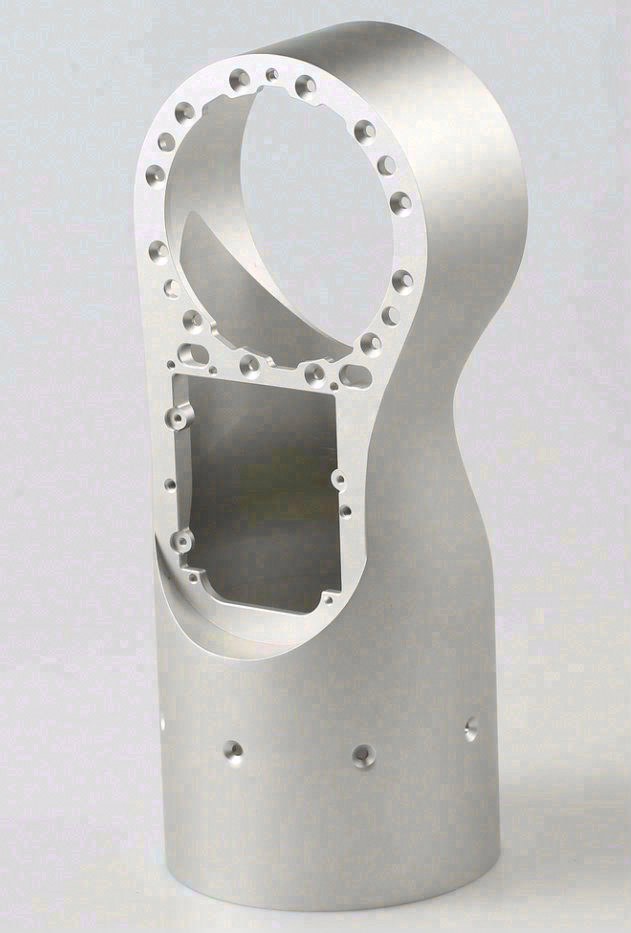
A forging arrives near-net-shape with a skin and a draft. The machining step removes the skin, establishes the datums, and produces the critical bores, faces and threads to tolerance — typically ±0.003 mm on milling and ±0.002 mm on turning. The trick is designing the machining around the forging's natural datums so you do not machine away the very grain flow you paid for.
Where this combination shows up
E-bike drivetrain hardware, suspension and steering components, and industrial parts that cycle millions of times. The logic is the same everywhere: the forging carries the load, the machining delivers the fit. If you are designing a part like this, the earlier we see the forging drawing, the cheaper the machining becomes.
How it is quoted and ordered
Two numbers: the forging (tooling plus piece price, amortised over the run) and the machining (per-part, from the forging's datums). We quote both, so you see the full cost of the part, not just the cutting. Prototypes can start from bar stock to validate geometry, then move to forged blanks for production.
Do I need a forging, or can I machine from solid?
For a prototype, machine from solid. For a production fatigue part, the forging usually pays for itself in strength and material savings — we will show you the break-even rather than defaulting to one.
Is there a minimum for forged parts?
The forging tool has a cost, so forging makes sense above a batch size where the tooling amortises. Below that, we machine from bar stock and keep the same tolerances.
Aluminum CNC Machining — Related Pages
Send the part and its load case, and we will tell you whether to forge, cast, or machine from solid.
Send a 3D file to [email protected] · +86 13126536955
Continue reading: Aluminum CNC Machining · Anodized Aluminum Parts · 3 Axis CNC Machined Parts
Standards referenced on this page
- ASTM A484/A484M-24 — Standard Specification for General Requirements for Stainless Steel Bars, Billets, and Forgings
- ASTM B211/B211M-19 — Standard Specification for Aluminum-Alloy Rolled or Cold Finished Bar, Rod, and Wire
- ISO 9001 — Quality management systems — Requirements